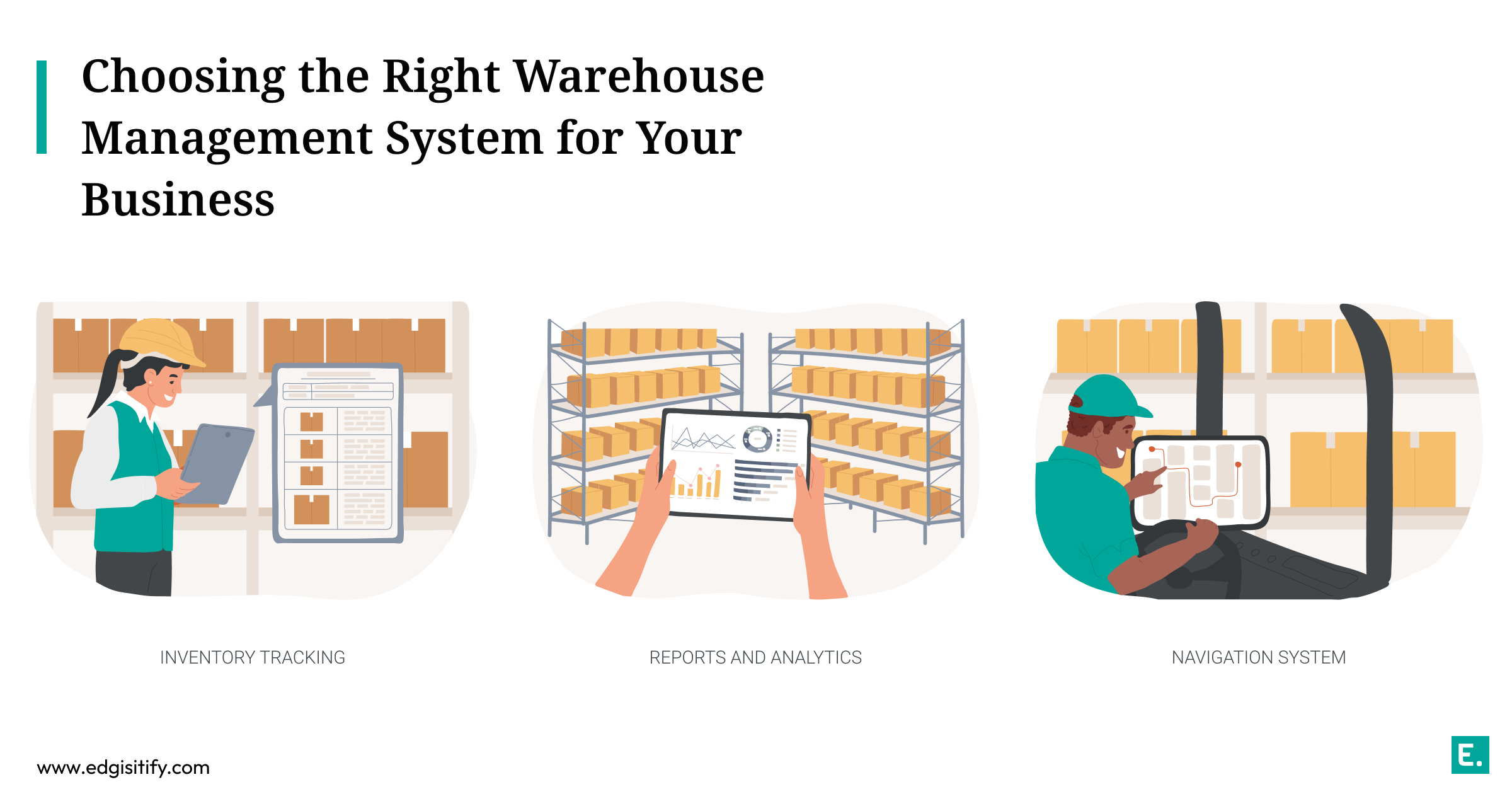
Selecting the right Warehouse Management System (WMS) is critical to streamlining operations and improving efficiency. Here’s how to choose the best WMS for your business.
1. Understand Your Business Needs
Before selecting a WMS, assess your specific needs.
- Scalability : Ensure the WMS can grow with your business, handling increased inventory and order volumes.
- Integration : Choose a WMS that seamlessly integrates with your existing systems, such as ERP, e-commerce platforms, and transportation management systems.
- User-Friendly : Opt for a system that’s easy for your team to learn and use, minimizing training time.
2. Key Features to Look For
A good WMS should offer essential features that align with your business operations.
- Inventory Management : Real-time tracking of inventory levels, locations, and movements to avoid stockouts or overstocking.
- Order Fulfillment : Automated order picking, packing, and shipping processes to speed up order fulfillment and reduce errors.
- Reporting & Analytics : Detailed reporting tools to analyze warehouse performance and identify areas for improvement.
3. Consider Automation Capabilities
Modern WMS should support automation to enhance efficiency.
- Automated Picking : Systems that support robotics and automated picking can drastically reduce order processing time.
- Inventory Tracking : IoT integration for real-time tracking and management of inventory.
- Workflow Automation : Automate routine tasks such as order processing, replenishment, and inventory counts to free up staff for higher-value activities.
4. Evaluate Cost vs. ROI
Consider the cost of the WMS in relation to the expected return on investment.
- Implementation Costs : Factor in the cost of software, hardware, and training.
- Operational Savings : Calculate potential savings from reduced labor costs, improved accuracy, and faster order fulfillment.
- Scalability Costs : Ensure the system is cost-effective as your business grows, avoiding significant increases in costs as your needs expand.
5. Vendor Support and Service
Choose a WMS provider that offers strong support.
- Customer Support : Ensure the vendor provides ongoing support and troubleshooting assistance.
- Training : Look for vendors that offer comprehensive training for your team.
- Updates and Upgrades : Select a WMS with regular updates to stay current with industry changes and technological advancements.
Conclusion
Choosing the right Warehouse Management System is crucial for optimizing your warehouse operations. By understanding your needs, focusing on key features, and considering automation and support, you can select a WMS that drives efficiency and accuracy in your warehouse.
At Edgistify, we offer tailored solutions to help you implement the right WMS for your business. Contact us today to learn how we can help streamline your warehouse operations.