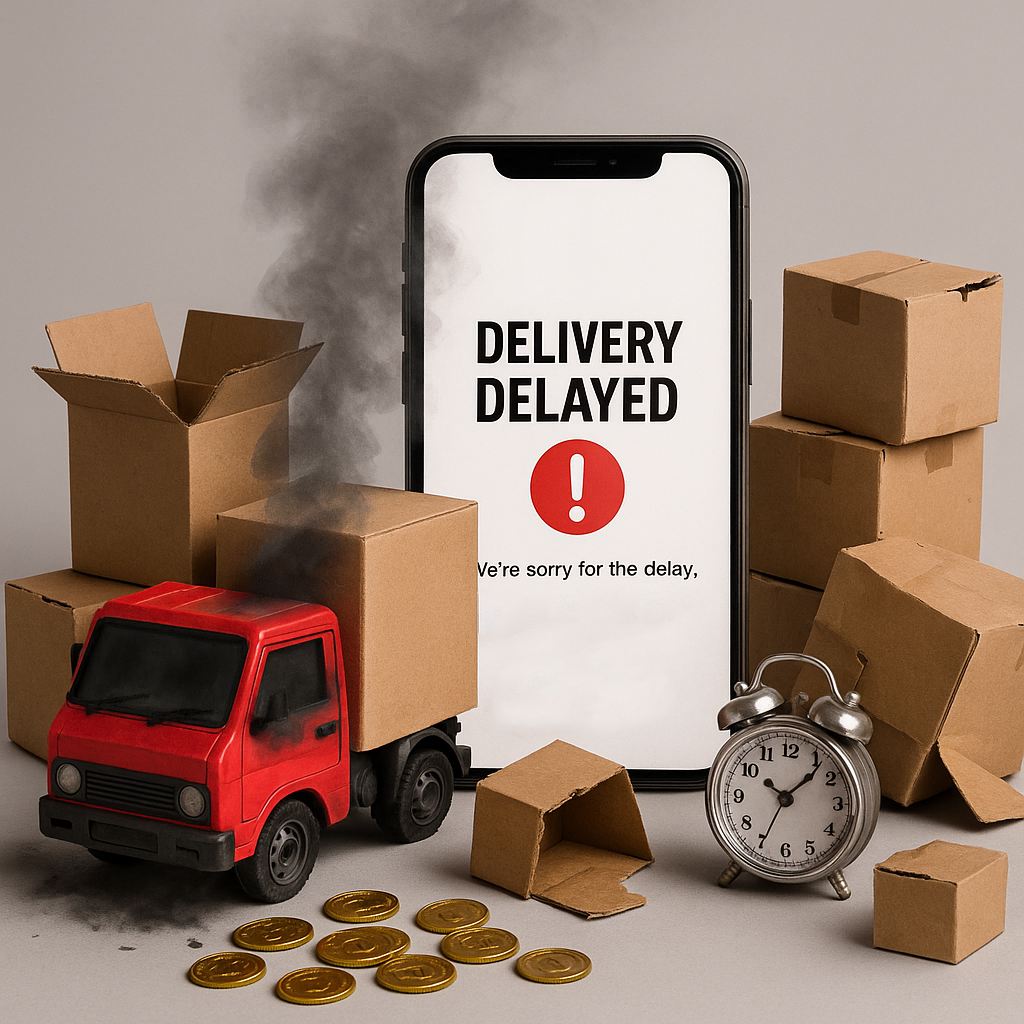
Quick Commerce (Blinkit, Zepto, Instamart) offers volume but threatens Brand Sovereignty. The 3 biggest risks for 2025 are:
- The "Data Black Hole" : Loss of direct customer access (First-Party Data).
- The "Expiry Blind Spot" : Inability to track batch-level expiry on certain platforms.
- Margin Erosion : High commissions + "Blind" inventory losses making unit economics unviable.
The Fix: You need a Unified Integration Hub (Edgistify) to regain visibility and control while riding the Q-Commerce wave.
Quick commerce. The promise is seductive: 10-minute delivery and instant gratification. For Indian D2C brands, it feels like the new gold rush.
But behind the dazzling GMV numbers lies a brutal operational reality. When you hand your inventory to a platform, you often hand over your control, your data, and a significant chunk of your margin.
Here is the "God Scientist" breakdown of the hurdles brands encounter in the Q-Commerce ecosystem—and the architectural solutions needed to survive.
1. Losing the "Customer Connection" (The Data Trap)
The Problem:
When a customer buys your product on a Quick Commerce app, they are not your customer. They are Blinkit’s customer or Zepto’s customers.
- Data Blindness : You lose access to First-Party Data (Email, Phone, Buying History). You cannot run retargeting ads or calculate LTV (Lifetime Value).
- Brand Dilution : Your unboxing experience is replaced by a generic brown paper bag. You become a commodity on a digital shelf.
The Impact: You get the sale, but you lose the relationship, making it impossible to build long-term loyalty.
2. The "Expiry Blind Spot" (A Technical Nightmare)
The Problem:
This is a critical operational flaw that few talk about.
Managing perishables (FMCG, Food, Beauty) requires FEFO (First-Expired-First-Out) logic. However, the tech maturity varies wildly across platforms.
- The API Gap : While some platforms (like Blinkit) allow for granular batch tracking via API, others (like Zepto or Swiggy Instamart) often lack the API infrastructure to report real-time expiry data back to the brand.
- The Risk : You might have inventory sitting in a dark store that is about to expire, but your central system shows it as "Available."
Warning: This "Blind Spot" leads to massive write-offs and penalties from the platforms when they discover expired stock that you couldn't track.
3. The Economics of "Instant" (Profit Erosion)
The Problem:
Speed is expensive. The Q-commerce model forces brands to absorb heavy costs.
- Commission Squeeze : High listing fees and commissions eat into margins.
- The "Low AOV" Trap : For lower-priced items (e.g., a ₹50 snack), the logistics and platform fees can make the channel net-negative. You are essentially paying to sell your product.
4. The Integration Jigsaw Puzzle
The Problem:
Connecting to one platform is easy. Connecting to three platforms, plus Amazon, plus your Shopify store, is an IT disaster.
- Tech Debt : Building custom API pipes for each Q-commerce player requires a dedicated engineering team.
- Sync Latency : If your inventory doesn't sync in real-time, you risk Overselling (getting orders for stock you don't have) or Underselling (stock is there, but the app shows "Out of Stock").
The Way Forward: Orchestrate, Don't Just Participate
The answer isn't to leave Quick Commerce; it is to manage it with a stronger backbone.
Edgistify acts as the "Middleware" between your brand and the chaos of Quick Commerce. We provide the Supply Chain Execution Layer that protects your interests.
How Edgistify Solves the Q-Commerce Crisis:
| The Challenge | The Edgistify Solution |
|---|---|
| Inventory Blindness | Unified OMS/WMS: A single dashboard that gives you visibility into inventory across all channels (Q-Commerce, D2C, Retail) in real-time. |
| The 'Expiry' Risk | Batch-Level Intelligence: Our system tracks manufacturing dates and expiry at the inwarding stage, alerting you before stock spoils—even if the Q-commerce platform's API doesn't. |
| Logistics Costs | Appointment-Based Replenishment: We streamline the delivery of stock to the Q-commerce dark stores using our 'Appointment-Based Delivery' system, eliminating detention charges and rejections. |
| Dependency | Sonic (Same-Day D2C): We enable you to offer '30-minute to Same-Day' delivery on your own website. This helps you steal customers back from platforms and own the data. |
The "Sonic" Advantage: Your Own Q-Commerce Channel
Why pay 30% commission for speed?
With Edgistify Sonic, we enable brands to activate Dark Stores in key cities. This allows you to offer "Quick Commerce Speed" directly from your Shopify/Woocommerce store.
- You keep the Data.
- You keep the Margin.
- You control the Experience.
Conclusion: Regain Control
Quick Commerce is a powerful sales channel, but it makes for a terrible master. To thrive, you need a partner that ensures you are not just "listed" but "optimised."
Edgistify bridges the gap between technology and on-ground execution. Whether it is managing expiry dates, integrating APIs, or building your own same-day delivery network, we turn chaos into a competitive advantage.
Coming Next:
Stay tuned for our next guide: "The Playbook: How to List Yourself on Quick Commerce Platforms (And Rank #1 in Search)."