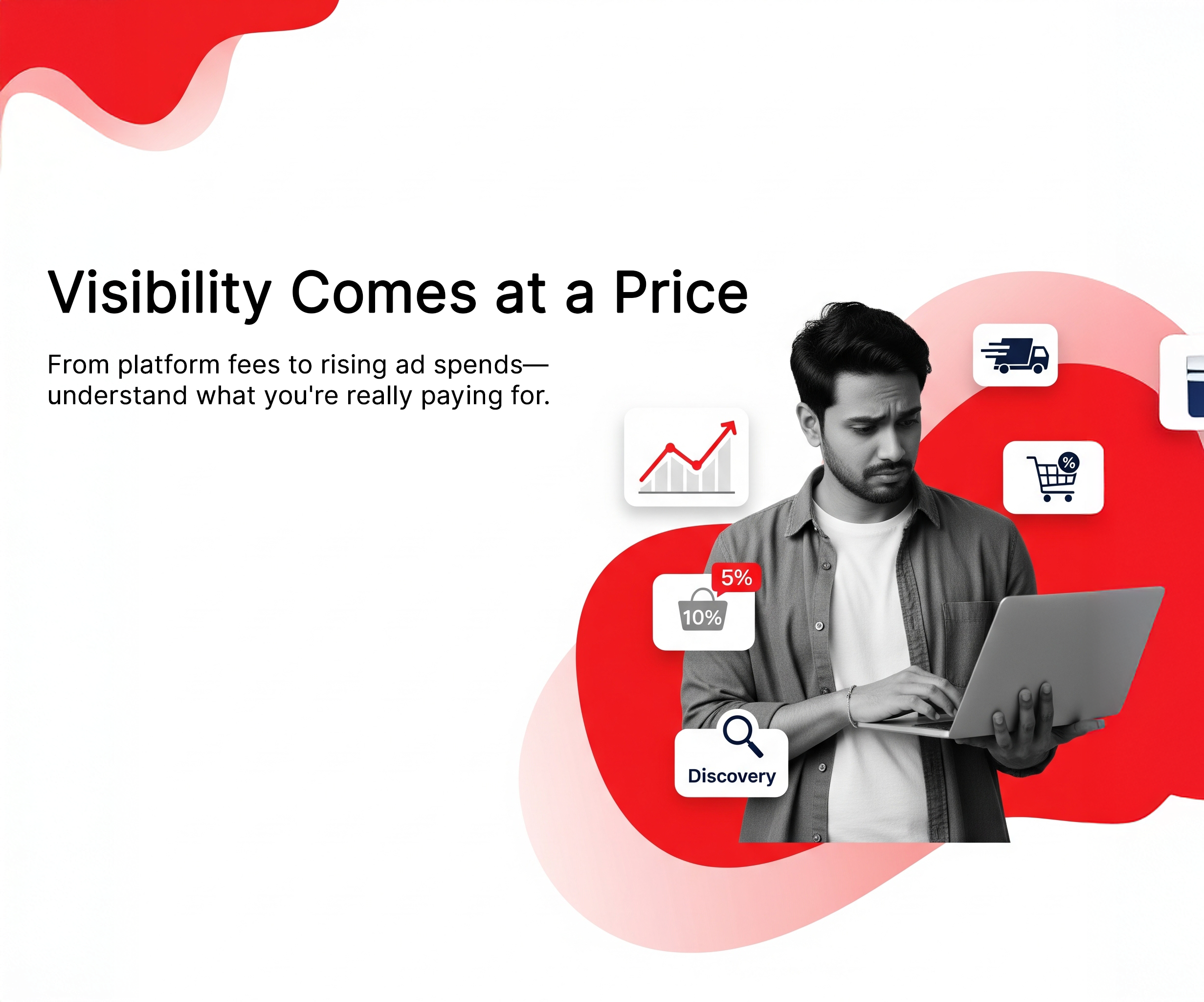
The True Cost of "Discovery" in E-commerce: A Brand's Guide to Profitability
The e-commerce world is a tough market. The big players, like Amazon, Flipkart, and Myntra, seem to be the only route to success. They provide a tempting offer: a large audience and an established system for selling. However, the costs of entry are higher than many brands understand.
On top of the typical commissions, which can reach 25% or more depending on the product category, brands must deal with a mix of extra fees. These include charges for payment gateways, fixed closing fees, and costs for premium services like same-day delivery. The most hidden and often ignored cost is the "discovery fee". This fee does not appear on an invoice. Instead, it's the total percentage of your revenue that you give up to have your product shown to their massive customer base. Many brands mistakenly think this expense is crucial for gaining customers.
Reclaiming Your Profitability with a Direct-to-Consumer Strategy
What if you could turn those "discovery fees" into a powerful engine for your own brand's growth? This is the core principle behind building a successful direct-to-consumer (D2C) channel. Instead of paying a third-party marketplace to "discover" you, you can invest those very same funds into creating a superior customer experience on your own web store.
Imagine offering same-day delivery (SDD) on your own website, a service that rivals the best of the marketplaces. This isn't just about speed; it's a powerful marketing tool. It instantly elevates your brand's value, reduces cart abandonment, and builds a level of trust and loyalty that marketplaces can never fully replicate. A customer who has a seamless, fast delivery experience from your own store is far more likely to become a repeat buyer and brand advocate.
This is where a strategic partnership comes into play. A solution like Sonic can power this premium delivery experience for you. You use the money you save from marketplace fees to enable SDD, turning a passive cost into an active, brand-building investment.
Scaling Smart: The Dark Store Advantage
As your brand gains traction and order volume increases, this strategy becomes even more potent. With a logistics partner, you can move beyond a single fulfillment center and establish a network of dark stores in key urban areas. These are essentially mini-warehouses optimised for speed.
Sonic allows you to scale your same-day delivery offering and even introduce 1-2 hour deliveries cost-effectively and sustainably. The proximity of these dark stores to your customers dramatically reduces last-mile costs and delivery times. The investment in this infrastructure is a strategic business decision that pays dividends in both customer satisfaction and long-term profitability, far outweighing the ongoing percentage-based fees you'd pay on a marketplace.
The Hybrid Model: Maximizing Reach Without Sacrificing Margin
This doesn't mean you should abandon marketplaces entirely. A hybrid strategy is often the most effective. Continue to list your products on major platforms for their undeniable reach and to capture customers who are loyal to those ecosystems. However, view these platforms as a top-of-funnel marketing channel.
The real goal is to build a direct relationship with your customers on your own website, where you control the entire experience and, most importantly, the profit margin. By offering a compelling value proposition—like ultra-fast delivery powered by Sonic—you give customers a compelling reason to buy directly from you, saving you from unnecessary fees and allowing you to reinvest those savings into your own brand's marketing and growth. In this dynamic, you don't lose money; you empower your brand.