Executive Summary
- Working Capital Optimization : Moving from leased, third-party facilities to controlled, owned infrastructure allows for immediate data standardization, reducing working capital blockages associated with reconciliation delays (T+7 days to T+1 day).
- Cost Reduction (EBITDA Uplift) : By training proprietary Agentic AI models on high-fidelity, localized data (e.g., specific Tier-3 city pickup bottlenecks), businesses can systematically cut D2C logistics costs from an average of 15% down to a predictable 10%.
- Scalability & Predictability : Owned warehouses provide the necessary "sandbox" for AI training, ensuring that operational scaling from ₹20Cr to ₹500Cr remains predictable, regardless of external carrier variability or hyper-local market volatility.
Introduction: The Data Dilemma of Scaling Indian E-commerce
The journey of any ambitious Indian e-commerce player is a masterclass in navigating friction. Scale isn't just about increasing order volume; it’s about mastering the micro-friction points: the failed COD pickup in a Tier-2 market, the unpredictable RTO rate due to geographical gaps, or the manual reconciliation of 50 different carrier invoices.
For any founder scaling from a ₹20Cr revenue base to a ₹500Cr behemoth, the core bottleneck shifts from inventory to data. Cloud-based, multi-tenancy logistics solutions offer visibility, but they rarely offer fidelity. They give you aggregated numbers, not the granular, actionable data points required to build truly autonomous, self-learning predictive systems—the kind of Agentic AI that will define the next decade of global logistics.
This is where the concept of the Owned Warehouse changes from being a CapEx expenditure to a critical Data Asset.
The Limits of Leased Space: Why Third-Party Data is Incomplete
When you operate out of third-party fulfillment centers or network of leased spaces, you gain reach, but you surrender data control. The operational data you receive is inherently fragmented and generalized.
The Problem-Solution Matrix: Leased vs. Owned Infrastructure
| Metric / Challenge | Leased (3PL) Model | Owned (Controlled) Model | Financial Impact |
|---|---|---|---|
| Data Granularity | High-level metrics (Daily throughput, total errors). | Hyper-granular (Specific SKU handling times, localized bottleneck identification, worker motion patterns). | Enables the AI to learn *why* things fail, not just *that* they failed. |
| Process Standardization | Variable (Depends on the 3PL's SOPs and staff training). | Absolute (You enforce your proprietary, optimized process end-to-end). | Reduces process risk and validates the AI's assumptions in a controlled environment. |
| Data Ownership & Training | Limited access; data is aggregated and often anonymized. | Full, clean, longitudinal data stream; ideal for proprietary model training. | Core IP development; the data itself becomes a strategic asset. |
| Risk Profile | High dependency on external vendor reliability. | High control; risk mitigation is internal. | Predictable operational costs, improving EBITDA stability. |
The crucial takeaway for the God Scientist of Indian business is this: AI agents don't learn from averages; they learn from extremes and exceptions. And those exceptions—the specific reason a package failed in Pune vs. Jaipur—only exist within your controlled environment.
Operationalizing the Edge: How Owned Warehouses Power Agentic AI
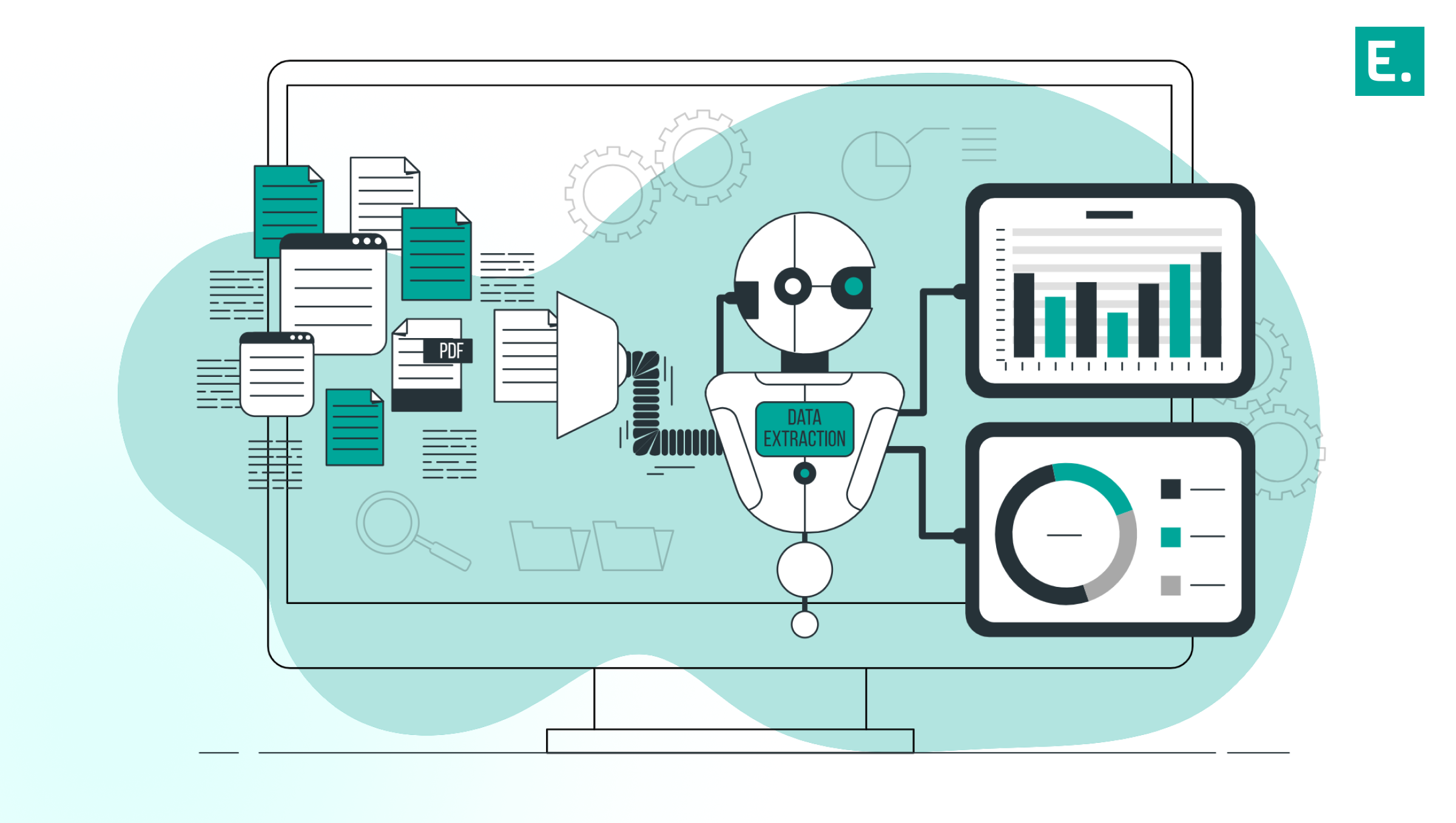
Agentic AI models are not merely predictive; they are autonomous. They observe a process, identify a failure point, simulate a fix, and then execute that fix. For them to be reliable, they require impeccable, reliable data—a data stream we call Data Fidelity.
The Data Fidelity Loop: From Physical Asset to Digital Intelligence
In an owned warehouse, you create a closed-loop system:
- Physical Process : Goods enter and are managed solely by your defined, optimized workflow.
- Data Capture : Every action (pick, pack, weigh, reconcile) is captured using advanced IoT/vision systems.
- AI Training : Your proprietary models (like those built on EdgeOS) ingest this clean, standardized data. The AI learns the true time-motion studies, the actual SKU compatibility issues, and the real geographical cost of last-mile delivery in a specific pin code.
- Optimization Cycle : The AI generates a new, optimized SOP. This SOP is tested in the physical warehouse, generating a new, cleaner data set, restarting the loop.
This self-learning cycle is impossible to achieve with the fragmented data of a 3PL network.
The Edgistify Advantage: Unifying the Data Backbone
To make the owned warehouse truly intelligent, the data must be unified. This is where Edgistify’s technological backbone becomes the strategic enabler.
By implementing EdgeOS within your owned infrastructure, you achieve a Unified Inventory Pool. This system does more than just track stock; it standardizes the data capture across all physical touchpoints—from the inbound vendor receiving dock to the outbound dispatch point.
Furthermore, the Automated Tally Reconciliation capability ensures that the digital records match the physical reality at the moment of transaction. This eradicates the biggest source of working capital leakage in Indian commerce: the manual, delayed, and often inaccurate reconciliation of COD/RTO payments.
Financial Impact: The Shift from Cost Center to Profit Generator
| Improvement Area | Traditional Model (3PL) | Edgistify (Owned + EdgeOS) | Financial Uplift |
|---|---|---|---|
| Logistics Cost % | 15% - 18% (Due to manual errors, delays, mis-routes). | 10% - 12% (Due to AI-optimized routing, minimal errors). | Potential 30-50 bps improvement in EBITDA Margin. |
| Working Capital Cycle | Slow (Days spent reconciling payments). | Near Real-Time (Instant reconciliation, faster cash unlocking). | Significant reduction in working capital blockages. |
| Operational Risk | High (Dependent on vendor stability). | Low (Internal control and predictive failure mitigation). | Predictable cash flow for sustained high-growth scaling. |
Conclusion: The Strategic Imperative for the Modern Founder
For the visionary business leader operating in India’s hyper-competitive omni-channel space, the choice is no longer about where to store inventory, but who controls the data generated by that inventory.
Owned warehouses, leveraged with advanced platforms like Edgistify's EdgeOS, transform your physical location from a mere cost center into the most valuable Data Asset in your entire operational stack. This controlled environment is the only true training ground for the Agentic AI models that will eventually allow your business to scale past the ₹500Cr mark with unparalleled efficiency and predictive accuracy.
The self-learning edge belongs to those who own their data.