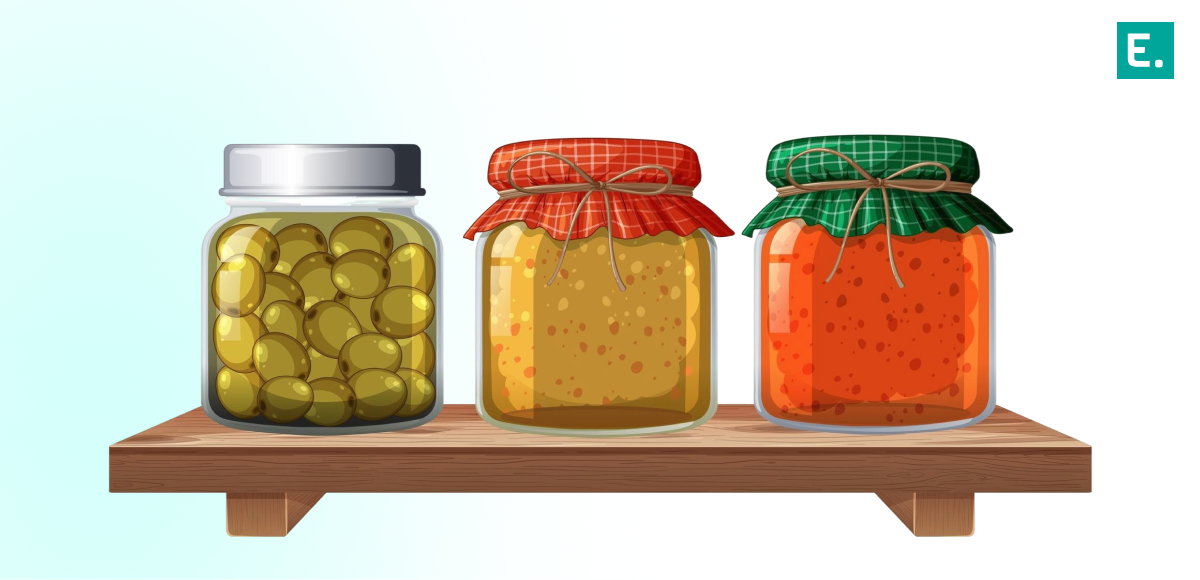
Often, artisanal food startups begin their journey in the food business with founder passion and good family recipes. At the same time, founders are using small commercial kitchens or local stockrooms to package and send their products during those early times.
Over time, with the growth of the brand awareness and monthly sales increasing from hundreds to tens of thousands, the existing manual processes for dispatching the products start to fail to meet the growing demand.
In order to evolve from a small niche brand into a top D2C company, food brands have to build a supply chain, winning in terms of efficiency and speed.
The Anatomy of a Fragmented Food Supply Chain
When food startups expand rapidly and outgrowing their backend infrastructures, operational bottlenecks occur. Here are the main warning signs:
- Stock Problems : Customers ordering online items that do not exist in the local warehouse.
- Inconsistency with Packaging : Using different packaging methods that create broken jars, spilled sauces, and flattened snack packs.
- Burnt Out Operations : Founders who spend hours seeking lost parcels and talking to customer service.
Improving the fulfillment takes more than just using software; it’s about building a complete system for precision and speed.
4 Steps to Modernize Your D2C Food Supply Chain
1. Transition from using spreadsheets to applying real-time cloud technology
Using manual batch tracking means unnecessary operational risks. Incorporating a centralized WMS allows operators to access the data on the number of items in stock from all locations and channels immediately. Stock alerts ensure timely awareness about the need for replenishment before stock-out occurs.
2. Standardize workflows during the processes of picking and packing
Introducing standard operation procedures allows for turning warehouse operations into a repeatable and efficient process. Using pick-path optimization, pick-to-light systems, and automated barcoding scanning enables fulfillment employees to pick the required product variant, size, and batch every time.
3. Place inventory effectively at regional hubs
Shipping fresh food products from a warehouse to a distant customer leads to high shipping costs and long delivery times. Distributed fulfillment means obtaining fast-moving SKUs in regional dark stores or multi-tenant warehouses.
4. Partner with logistics providers applying advanced technologies
Creating your own logistics network in the country requires considerable capital investments into leases, labor management, and technologies. Using the services of full-service supply chain providers like Edgistify gives D2C food brands an opportunity to use fast-growing warehouses and sophisticated SLA management.
The Business Impact: Turning Fulfillment into a Competitive Advantage
Modernizing your logistics operations yields measurable business returns:
| Metric | Manual Dispatch Setup | Modernized Tech-Driven Logistics |
|---|---|---|
| Order Accuracy Rate | ~90-94% (High mispick risk) | 99.8%+ (Barcode verified) |
| Average Order Processing Time | 24 - 48 Hours | Under 4 Hours |
| Scalability Limit | Hard cap based on manual labor | Virtually limitless peak volume |
| Founder Focus | Day-to-day warehouse firefighting | Product innovation & strategic growth |