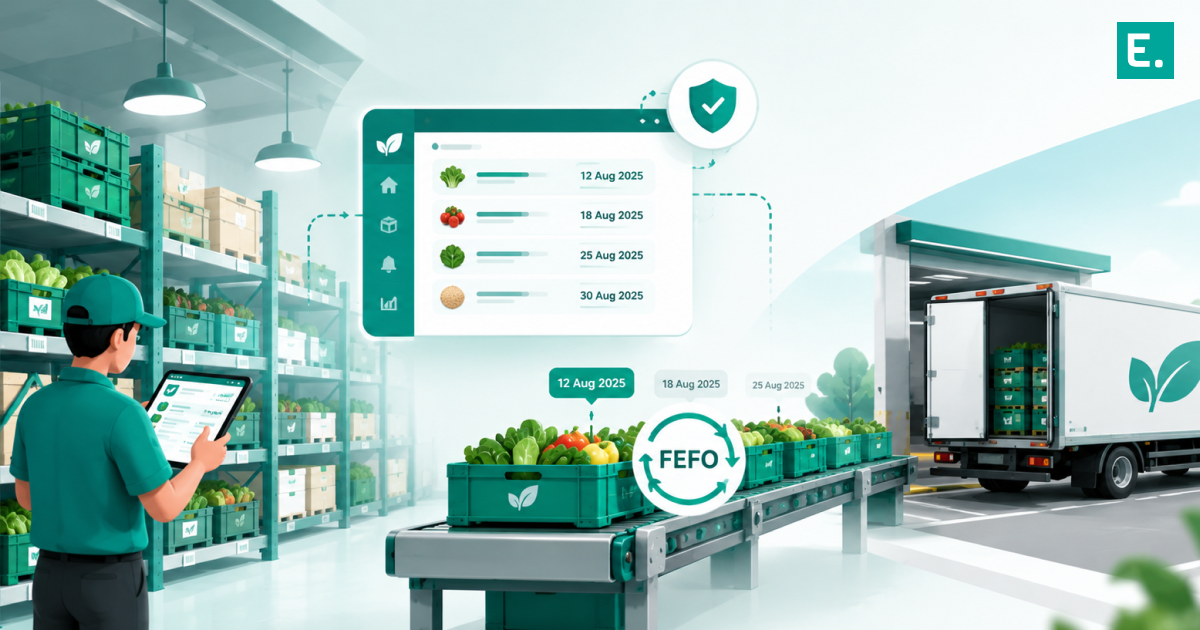
Operating in the organic food plus natural products sector has a particular set of operating problems. The likes of A2 cultured ghee, cold-pressed oils, millet flour products, and other fresh organic goods have strict shelf-life constraints. Without tight system-based warehouse management, stock will quickly degrade from revenue to waste.
For fast-growing organic food companies, relying on manual count and unorganized warehousing creates big blind spots. To protect the quality of products, it is important to match modern technology with inventory rotation methods.
The High Cost of Unstructured Perishable Warehousing
The perishable food supply chain is exposed to serious financial hazards when operating using traditional means or old paperwork methods as follows: Manual Activities ──► Low Batch Monitoring ──► Outdated Stock Left in Storage ──► Product Loss due to Expiry
- Risks of Worn-out Inventory : In the absence of automated batch monitoring, older inventory will be hidden at the back of shelves, thus allowing for faster fulfillment of new shipments.
- Lack of instant monitoring : managers won't be able to determine available volumes and their expiration dates
- Bad Customer Experience : Delivering products that are close to expiration means hurting brand reputation and starting costly return processes.
Modernizing Warehousing with WMS and FEFO Protocols
In order to ensure that products do not spoil and minimize errors in the warehousing process, food companies need to introduce e-based Warehouse Management Systems with automated rules for stock rotation.
1. Implementing Strict FEFO (First-Expired, First-Out) Rule
Gone are the days of FIFO (First-In, First-Out) in the world of retail since the industry is adopting FEFO (First-Expired, First-Out) with respect to perishable items. A state-of-the-art WMS allows the staff to be notified about the batches that have the nearest expiration dates so that they can pick goods therefrom.
2. Implementation of real-time Batch and Lot tracking
Automated software for Warehouse Management System (WMS) monitors every product at the SKU level, including batch number, production day and expiry period. This guarantees 100% visibility regarding the condition of the inventory on the shelf, making it possible to shut down any expired or almost expired products from sale.
3. Multi-channel order processing
Having a central WMS allows for integrating the direct-to-consumer website, marketplace platforms, and quick commerce channels, preventing overselling. Automated synchronization of the inventory makes the availability of the products correspond to the real situation at the warehouse.
Operational Transformation: Exactness at Large Scale
Instituting system-enabled inventory methodologies results in quick, noticeable supply chain performance enhancement:
- No Expiry Loss : Automated pick lists guide the personnel to precise bin locations, ensuring the best possible product rotation and no spoilage of stock.
- Total Inventory Visibility : Team members receive a dashboard that displays real-time data in real time about current stock count, batch age, and reordering signal.
- Allows for Strategic Focus : Delegation of warehouse management and fulfillment logistics allows an organization to free itself from everyday operational problems.
How Edgistify Helps Solve This Problem
To effectively manage perishable inventory, you need skilled professionals in warehouses and advanced technology in logistics. Edgistify prevents stock aging and fulfillment mistakes in the inventory through advanced Warehouse Management Systems (WMS), including easy integration with EasyEcom, that are tailored for perishables. By implementing FEFO and FIFO principles and standardized processes in warehouses and real-time batch monitoring, Edgistify makes certain that its users reserve freshness of product at all times and attain full control over their inventory.