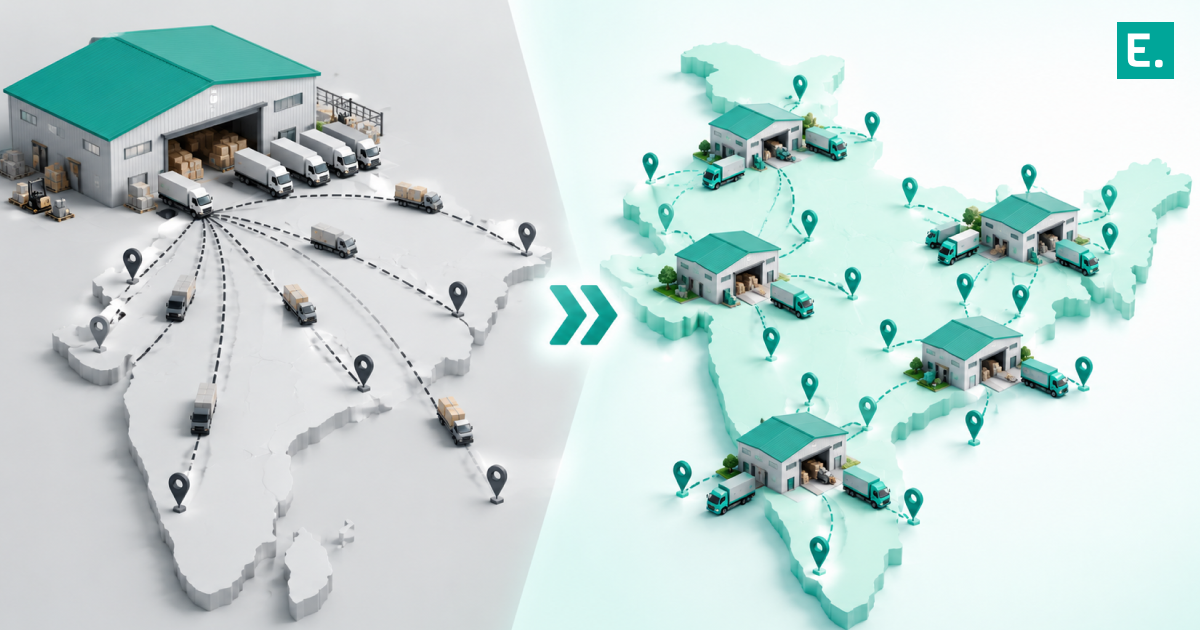
Successful growth is an important achievement for trending D2C companies. This means fast revenue growth that brings complications such as numerous orders on online shops, marketplaces, and quick commerce platforms. However, a lot of brands strive for geographical development managed from one central warehouse. As a result, businesses’ logistics become inefficient.
Using one central warehouse leads to increased shipping distances, high transportation expenses, delays in delivery, and lots of operational issues. Leading companies started to use the distributed network for logistics development.
The Hidden Costs of Single-Hub Fulfillment
Based on a single centralized warehouse causes serious structural challenges as the number of orders grows.
- High Shipping Costs : Handling national orders from one location will require many parcels to be sent as long-distance express parcels, which significantly increases shipping costs.
- Delayed Shipping : Shipping over long distances will lengthen transit times, which may damage customer satisfaction and cause an increase in order cancellations.
- Bottlenecks during Peak Seasons : As a single operating point means a single point of failure during peak seasons, it is easy to overwork the personnel of the warehouse when processing a huge amount of orders.
The Strategic Fix: Regional Hub Architecture
Through the move to a multi-warehouse approach rather than relying on one main hub, retailers can position their inventories in more densely populated areas of market demand. This way, with the use of regional distribution centers in major cities, such as Mumbai or Gurgaon, they can enhance their logistical framework in terms of efficiency and costs.
Key Performance Benefits of Distributed Fulfillment
- Reduction of Delivery Lead Time by 40% : By having rapid turnaround items closer to vital distribution points, ship times are significantly minimized.
- Shipping Costs Decrease by 15% to 20% : Changing regional long-distance deliveries means shipping costs are reduced.
- Scaling Labor to Meet Demand : By implementing fixed-standard Standard Operating Procedures (SOPs) and efficiently using flexible contract labor, warehouses are able to deal with increased demand without incurring high fixed costs.
Streamlining D2C Operations for Scale
The current state of decentralized inventory necessitates the deployment of innovative Warehouse Management Systems (WMS) for centralizing inventory management across all sales channels. In particular, the processes of automated routing of incoming goods will streamline the fulfillment process and enable organization of inventory for efficient order fulfillment.
By handing over warehousing and fulfillment processes to logistics providers, entrepreneurs can escape the rut of everyday routine and start focusing on product design and development instead.
How Edgistify Helps Solve This Problem
To deal with issues caused by centralized logistics, one needs to have a partner who knows how to deal with operations on a national scale. Edgistify overcomes the stagnation of single-hub systems by providing multi-hub fulfillment solutions powered by technology. It deals with B2C fulfillment efficiently, starting from setting up regional fulfillment centers, deploying flexible labor, and optimizing warehouse processes.